Overview
Two robotic tools developed at the UTS Robotics Institute in collaboration with Sydney Water for conditional assessment of sewer pipe walls using Pulse Eddy Current sensors.
Deployed Hardware
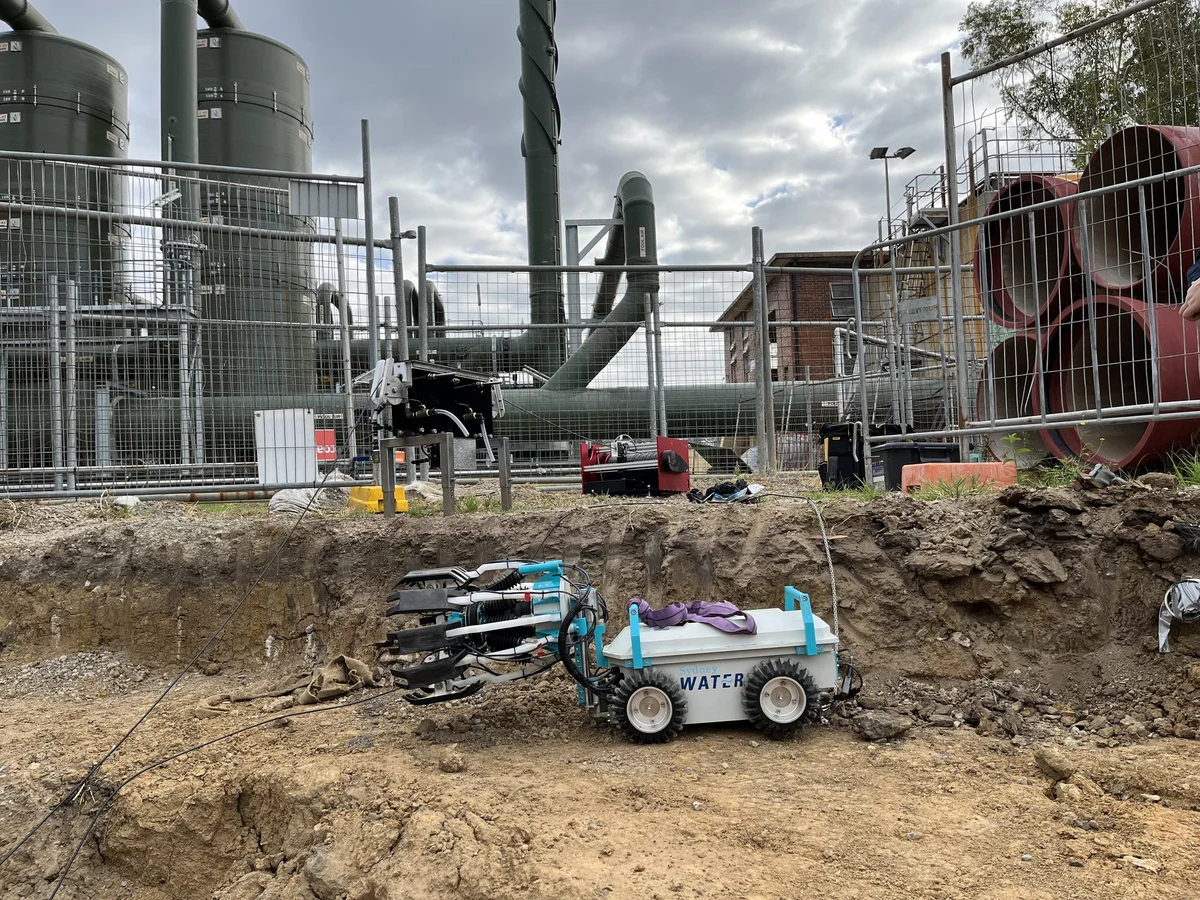
RIMA1
Larger-diameter platform deployed in 450–750 mm rising mains. Tethered via kevlar-braided VDSL cable and operated from a surface base station.
- 450–750 mm diameter rising mains
- 12-Channel PEC Cluster
- Intel RealSense D435
- 1m length
- Ductile Iron · Cast Iron · Stainless Steel
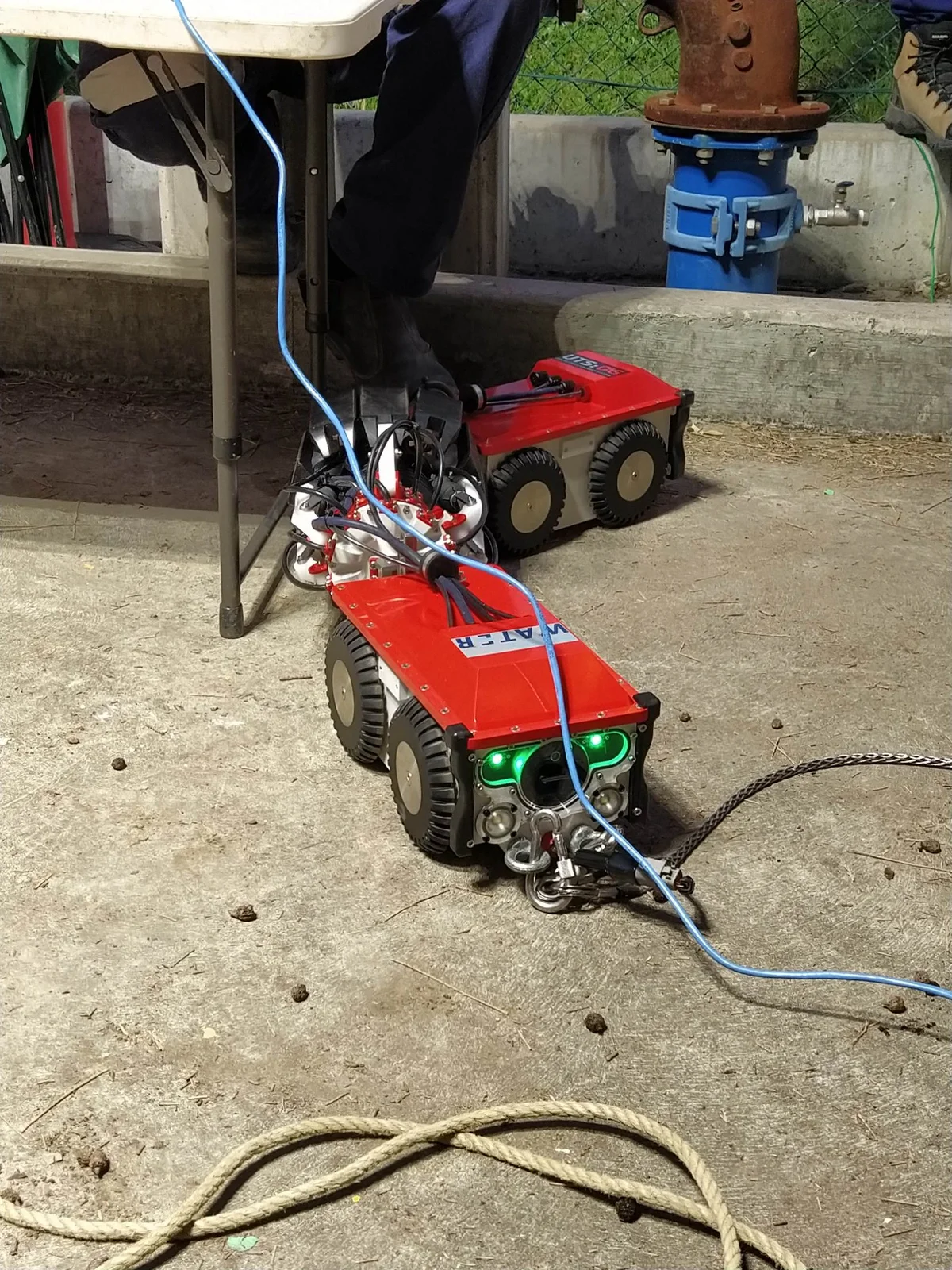
RIMA2
Compact variant for smaller-diameter mains. Dual L515 cameras provide front and rear pipe-wall coverage in tight conditions.
- 250–450 mm diameter rising mains
- 10-Channel PEC Cluster
- Dual Intel RealSense L515 (front & rear)
- 1m length
- Ductile Iron · Cast Iron · Stainless Steel
In Operation
RIMA1
RIMA2
Details
RIMA1 and RIMA2 are two robotic tools developed by the UTS Robotics Institute in collaboration with Sydney Water. They are designed to conditionally assess the pipe walls of sewer pipes using Pulse Eddy Current (PEC) sensors. Both robots operate in the ROS1 framework and communicate with the base station over VDSL via a kevlar-braided cable.
Both robots are capable of inspecting Ductile Iron, Cast Iron, and Stainless Steel rising mains.
My Contributions
Mechanical
- Designed tether protection units for flanged and flangeless pipes, adjustable across a range of diameters, with features prioritising ease of use for field personnel
- Designed a deployment cradle for RIMA2 to enable safer single-person deployment into sewer pits, with customisable flange adapters for different pipe sizes
- Designed a rollover-assist device for RIMA1 to allow manual extraction when the robot inverts in a pipe, avoiding the need for excavation
- Designed rear camera housing to mount to RIMA 1 hardware with minimal modification. Housing encased 1 sensor facing camera and 1 rear camera
Electrical
- Installed upgraded system boards on both platforms, carrying out electrical testing and integration of new sensors
- Built test rigs to validate new PCB designs before installation
- Installed new PCBs across both robots, including fine hand-soldering work on SMD components and data lines
- Performed electrical debugging across both platforms: sensor diagnostics, cable replacements, board probing, and component-level fault finding using various tools such as multimeters, logic analyzers and oscilloscopes
- Collected PEC Data for calibration, support analysis to identify potential benefits to various sensor and sensor housing methods
Software
- Updated ROS message types and node configuration across both platforms following hardware changes
- Redesigned the RIMA1 operator GUI in C++ with Qt Designer, improving control intuitiveness and adding camera feeds and IMU orientation visualisation
- Diagnosed and resolved a PEC data acquisition bug caused by a library change in the embedded firmware; identified through logic analysis
- Enhanced Python scripts for PEC sensor calibration data extraction and analysis
- Created shell scripts to streamline on-site data transfer and robot bring-up
- Contributed to a Master GUI project to make both robots operable by non-technical Sydney Water staff
Stakeholder Engagement
Engaged directly with Sydney Water stakeholders and external visitors to demonstrate system capability in the field, lab visits and showcases. Produced technical documentation, build notes, and handover materials.